Wednesday, September 05, 2007

E-mail Queries


Dear Dead Beat,


It seems that more literary agents are willing to accept e-mail queries. Do you have any advice how to go about writing them?


Computer Shy.


Dear Computer Shy,


Yes e-mail is becoming more acceptable in the publishing world. However not all agents or editors do accept them, so be careful. Read their guidelines. Only e-mail them if they say this is okay.


Once you know that e-mail is fine, there are a number of things to think about. Basically the procedure is the same one you would follow if applying by regular mail: A query letter, synopsis and extract if required (read their guidelines).


The real danger with e-mail is that we have got used to a form of communication that is often colloquial, sloppy, and written in shorthand. Too casual. Frequently it has not been proofread - that's why we have e-mail isn't it? We've no time to spare, zip zip, the world is spinning at an almighty rate, gotta keep up.


Unfortunately most agents would like you to sit back, take your time, consider style and presentation, oh yeah and be articulate, be focused, organised ... all those things writing depends on dammit.


Credo: Instant messages require instant responses. Reconsider your beliefs. Do not be impatient. Agents are a busy lot and often get more than one e-mail a day!


Treat the text of your e-mail like a traditional query. However it seems that it can be shorter - something to do with the size of the screen versus holding a sheet of paper in the hand.


You can include links if they are relevant - i.e. a link to your website etc. but only if it is relevant.


A few other thoughts - Include the word "Query" in your subject line, make sure your e-mail address, signature etc. is personal and professional, make sure you have the editor's own address

Friday, August 24, 2007

Dead Beat A.K.A. Casey Jones


Dead Beat has been riding the rails - all the way over to New Brunswick where he has taken up residence. So he has been on mute for a while, but he's back in a manner of speaking. Seeing as how he grew up on a healthy dose of Casey Jones, he's been having a good time however.


Now that his internet is up and running I guess he can start riding the cyber rails for a while instead.

Thursday, July 26, 2007

Characterisation and Plot

Dear Dead Beat,

I read your comments on characterisation with interest.Here's another question - Sometimes, especially toward the middle of a story, I find myself stopping, almost afraid to continue. I wonder why this is.

Typically, my story has started out strongly, I am really into the character, what he/she thinks, loves, likes, does, believes. I usually know how the story is going to end, it's just so hard to find the way to move my characters to that endpoint.

I wonder, is it possible for a writer to care too much about a character or characters,and therefore, allow his/her writing to become paralyzed? Do you have any theories about this? I'm writing short stories, as I have no novel ideas yet, or at least, nothing that could be spun into a novel-length treatment. I love short stories and I would like to succeed at it, but this problem has me stumped...

Gratefully yours,
stuck-in-the-middle(apologies to Stealer's Wheel)

Dear Stuck-in-the Middle,

You should know by now that Dead Beat has a theory about everything.

Is it possible for a writer to care too much about a character or characters? I guess it could be. I often hear this being said - especially in writing workshop situations. However, I sometimes think this is a misinterpretation of what is happening within the writing process. Plot is not as simple as it seems. When it becomes hard to move characters towards the end point it usually means that the plot has not emerged fully - the sequence of events driving the narrative from start to finish has faltered somewhere - i.e. the events are not entirely present, or the wrong events have presented themselves.

It may be that the attraction towards the characters has distracted the writer from the plot aspect of the story - that too much emphasis has been placed on character development. In this case the writer needs to acknowledge that enough work has been done on characterisation for now and that more work needs to be done on developing the narrative - on working out the plot.

Remember good old Chandler - when the plot flags, bring out a man with a gun.

Monday, July 23, 2007

When Is A Poem Not A Poem?


Dear Dead Beat, when is a poem not a poem?


Confused.


Dear Confused,


when it is a song by Leonar Cohen:


Stranger Song


It's true that all the men you knew were dealers


who said they were through with dealing


Every time you gave them shelter


I know that kind of man


It's hard to hold the hand of anyone


who is reaching for the sky just to surrender,


who is reaching for the sky just to surrender.


And then sweeping up the jokers that he left behind


you find he did not leave you very much


not even laughter


Like any dealer he was watching for the card


that is so high and wild he'll never need to deal another


He was just some Joseph looking for a manger


He was just some Joseph looking for a manger


And then leaning on your window sill


he'll say one day you caused his will


to weaken with your love and warmth and shelter


And then taking from his wallet an old schedule of trains, he'll say


I told you when I came I was a stranger


I told you when I came I was a stranger.


But now another stranger seems


to want you to ignore his dreams


as though they were the burden of some other


O you've seen that man before


his golden arm dispatching cards


but now it's rusted from the elbows to the finger


And he wants to trade the game he plays for shelter


Yes he wants to trade the game he knows for shelter.


Ah you hate to see another tired man


lay down his hand


like he was giving up the holy game of poker


And while he talks his dreams to sleep


you notice there's a highway


that is curling up like smoke above his shoulder.


It is curling just like smoke above his shoulder.


You tell him to come in sit down


but something makes you turn around


The door is open you can't close your shelter


You try the handle of the road


It opens do not be afraid


It's you my love, you who are the stranger


It's you my love, you who are the stranger.


Well, I've been waiting, I was sure


we'd meet between the trains we're waiting for


I think it's time to board another


Please understand, I never had a secret chart


to get me to the heart of this


or any other matter


When he talks like this you don't know what he's after


When he speaks like this, you don't know what he's after.


Let's meet tomorrow if you choose


upon the shore, beneath the bridge


that they are building on some endless river


Then he leaves the platform


for the sleeping car that's warm


You realize, he's only advertising one more shelter


And it comes to you, he never was a stranger


And you say ok the bridge or someplace later.


And then sweeping up the jokers that he left behind


you find he did not leave you very much not even laughter


Like any dealer he was watching for the card


that is so high and wild he'll never need to deal another


He was just some Joseph looking for a manger


He was just some Joseph looking for a manger


And then leaning on your window sill


he'll say one day you caused his will


to weaken with your love and warmth and shelter


And then taking from his wallet an old schedule of trains,


he'll say I told you when I came I was a stranger


I told you when I came I was a stranger.


.

Windows and Symbolism


Dear Dead Beat,


I have read several short stories for class recently. Three of the five assigned had a window in them. What is the literary significance of a window?


Thank you,

Gretchen


Dear Gretchen,


Dead Beat usually introduces windows into his fiction so that his characters can escape.


Beyond that Dead Beat can only surmise that (unless the readings were themed) this was mere coincidence. Not that there cannot be a literary significance to a window but three out of five seems too high a statistic.


But what of the literary significance of the 'window'? Of course it acts as a metaphor. Remember if mentioned once the 'window' is an image, if mentioned more than once, it becomes a symbol.


So metaphor and symbolism. So much depends on the intent of the particular story. Windows provide a glimpse out into another world or a glimpse in. They separate with fragility one world from another. On a higher level they may separate chronos from kairos.


Windows are so much more interesting and enticing than walls, but they need walls to support them, to make them necessary.

Tuesday, June 12, 2007

The Credible Incredible

Dear Dead Beat,

what is the most important quality of characterisation in fiction? I struggle to create believable characters.

Concerned.

Dear Concerned,

You have put your finger on it - credibility - characters must be credible. However, only in the context of the story. Characters on paper are never 'real', cannot be. They are heightened versions of real people. They have to live out their lives quickly in the story. Thus we heighten, intensify them. In the same way dialogue is not 'real' in stories. No one, thank God, really talks like characters in books. So they are credible in an incredible sort of way.

This 'heightened nature' is very important and hard to achieve.

Consistency may be part of the answer. If the character is consistent in their behaviour and so on, they are more likely to be accepted as 'real'. Once again, watch out. This consistency awaits the moment of inconsistency. The great moment of the story occurs when the character acts in a way unexpected.

Think on this and come back to me with further thoughts,

Dead Beat


Please ask any questions through the comment section.

Thursday, March 01, 2007

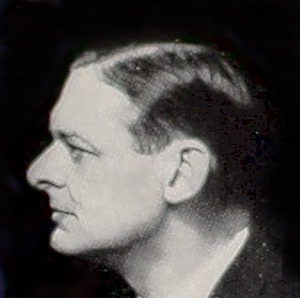
Reflections on Vers Libre by T.S. Eliot


As an added response to the previous query, Dead Beat has decided to print in full the essay Reflections of Vers Libre by T.S. Eliot, first published in 1917 in the British magazine The New Statesman.


Reflections on Vers Libre


Ceux qui possedent leur vers libre y tiennent:on n'abandonne que le vers libre. Duhamel et Vildrac.


A lady, renowned in her small circle for the accuracy of her stop-press information of literature, complains to me of a growing pococurantism. 'Since the Russians came in I can read nothing else. I have finished Dostoevski, and I do not know what to do.' I suggested that the great Russian was an admirer of Dickens, and that she also might find that author readable. 'But Dickens is a sentimentalist; Dostoevski is a realist.' I reflected on the amours of Sonia and Rashkolnikov, but forbore to press the point, and I proposed It Is Never too Late to Mend. 'But one cannot read the Victorians at all!' While I was extracting the virtues of the proposition that Dostoevski is a Christian, while Charles Reade is merely pious, she added that she could not longer read any verse but vers libre.
It is assumed that vers libre exists. It is assumed that vers libre is a school; that it consists of certain theories; that its group or groups of theorists will either revolutionize or demoralize poetry if their attack upon the iambic pentameter meets with any success. Vers libre does not exist, and it is time that this preposterous fiction followed the élan vital and the eighty thousand Russians into oblivion.

When a theory of art passes it is usually found that a groat's worth of art has been bought with a million of advertisement. The theory which sold the wares may be quite false, or it may be confused and incapable of elucidation, or it may never have existed. A mythical revolution will have taken place and produced a few works of art which perhaps would be even better if still less of revolutionary theories clung to them. In modern society such revolutions are almost inevitable. An artist, happens upon a method, perhaps quite unreflectingly, which is new in the sense that it is essentially different from that of the second-rate people about him, and different in everything but essentials from that of any of his great predecessors. The novelty meets with neglect; neglect provokes attack; and attack demands a theory. In an ideal state of society one might imagine the good New growing naturally out of the good Old, without the need for polemic and theory; this would be a society with a living tradition. In a sluggish society, as actual societies are, tradition is ever lapsing into superstition, and the violent stimulus of novelty is required. This is bad for the artist and his school, who may become circumscribed by their theory and narrowed by their polemic; but the artist can always console himself for his errors in his old age by considering that if he had not fought nothing would have been accomplished.


Vers libre has not even the excuse of a polemic; it is a battle-cry of freedom, and there is no freedom in art. And as the so-called vers libre, which is good is anything but 'free', it can better be defended under some other label. Particular types of vers libre may be supported on the choice of content, or on the method of handling the content. I am aware that many writers of vers libre have introduced such innovations, and that the novelty of their choice and manipulation of material is confused--if not in their own minds, in the minds of many of their readers--with the novelty of the form. But I am not here concerned with imagism, which is a theory about the use of material; I am only concerned with the theory of the verse-form in which imagism is cast. If vers libre is a genuine verse-form it will have a positive definition. And I can define it only in negatives: (1) absence of pattern, (2) absence of rhyme, (3) absence of metre.


The third of these qualities is easily disposed of. What sort of a line that would be which would not scan at all I cannot say. Even in the popular American magazines, whose verse columns are now largely given over to vers libre, the lines are usually explicable in terms of prosody. Any line can be divided into feet and accents. The simpler metres are a repetition of one combination, perhaps a long and a short, or a short and a long syllable, five times repeated. There is, however, no reason why, within the single line, there should be any repetition; why there should not be lines (as there are) divisible only into feet of different types. How can the grammatical exercise of scansion make a line of this sort more intelligible? Only by isolating elements which occur in other lines, and the sole purpose of doing this is the production of a similar effect elsewhere. But repetition of effect is a question of pattern.


Scansion tells us very little. It is probable that there is not much to be gained by an elaborate system of prosody, but the erudite complexities of Swinburnian metre. With Swinburne, once the trick is perceived and the scholarship appreciated, the effect is somewhat diminished. When the unexpectedness, due to the unfamiliarity of the metres to English ears, wears off and is understood, one ceases to look for what one does not find in Swinburne; the inexplicable line with the music which can never be recaptured in other words. Swinburne mastered his technique, which is a great deal, but he did not master it to the extent of being able to take liberties with it, which is everything. If anything promising for English poetry is hidden in the metres of Swinburne, it probably lies far beyond the point to which Swinburne has developed them. But the most interesting verse which has yet been written in our language has been done either by taking a very simple form, like the iambic pentameter, and constantly withdrawing from it, or taking no form at all, and constantly approximating to a very simple one. It is this contrast between fixity and flux, this unperceived evasion of monotony, which is the very life of verse.


I have in mind two passages of contemporary verse which would be called vers libre. Both of them I quote because of their beauty:


Once, in finesse of fiddles found I ecstasy,

In the flash of gold heels on the hard pavement.

Now see I That warmth's the very stuff of poesy.

Oh, God, make small

The old star-eaten blanket of the sky,

That I may fold it round me and in comfort lie.


This is a complete poem. The other is part of a much longer poem:


There shut up in his castle, Tairiran's,

She who had nor ears nor tongue save in her hands,

Gone--ah, gone--untouched, unreachable!

She who could never live save through one person,

She who could never speak save to one person,

And all the rest of her a shifting change,

A broken bundle of mirrors . . . !


It is obvious that the charm of these lines could not be, without the constant suggestion and the skilful evasion of iambic pentameter. At the beginning of the seventeenth century, and especially in the verse of John Webster, who was in some ways a more cunning technician than Shakespeare, one finds the same constant evasion and recognition of regularity. Webster is much freer than Shakespeare, and that his fault is not negligence is evidenced by the fact that it is often at moments of the highest intensity that his verse acquires this freedom. That there is also carelessness I do not deny, but the irregularity of carelessness can be at once detected from the irregularity of deliberation. (In The White Devil Brachiano dying, and Cornelia mad, deliberately rupture the bonds of pentameter.)


I recover, like a spent taper, for a flash

and instantly go out.

Cover her face; mine eyes dazzle; she died young.

You have cause to love me, I did enter you in my heart

Before you would vouchsafe to call for the keys.

This is a vain poetry: but I pray you tell me

If there were proposed me, wisdom, riches, and beauty,

In three several young men, which should I choose?


These are not lines of carelessness. The irregularity is further enhanced by the use of short lines and the breaking up of lines in dialogue, which alters the quantities. And there are many lines in the drama of this time which are spoilt by regular accentuation.

I loved this woman in spite of my heart. (The Changeling)

I would have these herbs grow up in his grave. (The White Devil)

Whether the spirit of greatness or of woman . . . (The Duchess of Malfi)


The general charge of decadence cannot be preferred. Tourneur and Shirley, who I think will be conceded to have touched nearly the bottom of the decline of tragedy, are much more regular than Webster or Middleton. Tourneur will polish off a fair line of iambics even at the cost of amputating a preposition from its substantive, and in the Atheist's Tragedy he has a final 'of' in two lines out of five together.


We may therefore formulate as follows: the ghost of some simple metre should lurk behind the arras in even the 'freest' verse; to advance menacingly as we doze, and withdraw as we rouse. Or, freedom is only truly freedom when it appears against the background of an artificial limitation. Not to have perceived the simple truth that some artificial limitation is necessary except in moments of the first intensity is, I believe, a capital error of even so distinguished a talent as that of Mr. E.L. Masters. The Spoon River Anthology is not material of the first intensity; it is reflective, not immediate; its author is a moralist, rather than an observer. His material is so near to the material of Crabbe that one wonders why he should have used a different form. Crabbe is, on the whole, the more intense of the two; he is keen, direct, and unsparing. His material is prosaic, not in the sense that it would have been better done in prose, but in the sense of requiring a simple and rather rigid verse-form and this Crabbe has given it. Mr. Masters requires a more rigid verse-form than either of the two contemporary poets quoted above, and his epitaphs suffer from the lack of it.


So much for metre. There is no escape from metre; there is only mastery. But while there obviously is escape from rhyme, the vers librists are by no means the first out of the cave.


The boughs of the trees

Are twisted

By many bafflings;

Twisted are

The small-leafed boughs.

But the shadow of them

Is not the shadow of the mast head

Nor of the torn sails.


When the white dawn first

Through the rough fir-planks

Of my hut, by the chestnuts,

Up at the valley-head,

Came breaking, Goddess,

I sprang up, I threw round me

My dappled fawn-skin . . .


Except for the more human touch in the second of these extracts a hasty observer would hardly realize that the first is by a contemporary, and the second by Matthew Arnold. I do not minimize the services of modern poets in exploiting the possibilities of rhymeless verse. They prove the strength of a Movement, the utility of a Theory. What neither Blake nor Arnold could do alone is being done in our time. 'Blank verse' is the only accepted rhymeless verse in English--the inevitable iambic pentameter. The English ear is (or was) more sensitive to the music of the verse and less dependent upon the recurrence of identical sounds in this metre than in any other. There is no campaign against rhyme. But it is possible that excessive devotion to rhyme has thickened the modern ear. The rejection of rhyme is not a leap at facility; on the contrary, it imposes a much severer strain upon the language. When the comforting echo of rhyme is removed, success or failure in the choice of words, in the sentence structure, in the order, is at once more apparent. Rhyme removed, the poet is at once held up to the standards of prose. Rhyme removed, much ethereal music leaps up from the word, music which has hitherto chirped unnoticed in the expanse of prose. Any rhyme forbidden, many Shagpats were unwigged.
And this liberation from rhyme might be as well a liberation of rhyme. Freed from its exacting task of supporting lame verse, it could be applied with greater effect where it is most needed. There are often passages in an unrhymed poem where rhyme is wanted for some special effect, for a sudden tightening-up, for a cumulative insistence, or for an abrupt change of mood. But formal rhymed verse will certainly not lose its place. We only need the coming of a Satirist--no man of genius is rarer--to prove that the heroic couplet has lost none of its edge since Dryden and Pope laid it down. As for the sonnet I am not so sure. But the decay of intricate formal patterns has nothing to do with the advent of vers libre. It had set in long before. Only in a closely-knit and homogeneous society, where many men are at work on the same problems, such a society as those which produced the Greek chorus, the Elizabethan lyric, and the Troubadour canzone, will the development of such forms ever be carried to perfection. And as for vers libre, we conclude that it is not defined by absence of pattern or absence of rhyme, for other verse is without these; that it is not defined by non-existence of metre, since even the worst verse can be scanned; and we conclude that the division between Conservative Verse and vers libre does not exist, for there is only good verse, bad verse, and chaos.

The Liberation of Rhyme


Dear Dead Beat,


Has rhyme gone out of fashion or have I?


Consummate Rhymester


Dear Consummate Rhymester,


It's not so much that rhyme has gone out of fashion but that perhaps for a while it got a tad overused. Remember T.S. Eliot in his Reflections on "Vers Libre" (and this was in 1917 note!):


"And this liberation from rhyme might be as well a liberation of rhyme. Freed from its exacting task of supporting lame verse, it could be applied with greater effect where it is most needed."


Hear, hear!


All poetry depends on rhyme. Sounds that connect. Sounds that drive the reader forward for the partner to the rhyme and connect the reader back to the original partnered sound. These rhymes can be direct or indirect. They can come at the end of the line or somewhere in between. The point is to use rhyme for its greatest effect - not for the sake of rhyme itself.


It is but one component in the poetic form, don't abuse it, don't overly depend on it because the poem depends on it more.

Send any queries to Dear Dead Beat via the Comments

Monday, February 12, 2007

Make Dead Beat Eat His Words


Dead Beat notices that his blog site has been longlisted for the Irish Blog Awards in the Best Art and Culture Section.


Well as you know Dead Beat is highly cultured - just ask Hudson... on second thoughts....


Wouldn't it put Dead Beat in his place if he were to win...


Go ahead make him eat his words


Voting Form


you have until Friday 18th Feb.

Thursday, February 08, 2007

Ideas For Writing


Dear Dead Beat,


I keep a notebook hand at all times for jotting down my ideas. Very often these come to me while lying in bed at night. I have to get up and turn on the light to write them down. My husband is not so pleased about this, but I am afraid of losing my ideas if I leave them until the morning.


Anonymous


Dear Anonymous,


Which would you rather: lose your ideas or lose your husband? Okay, okay, it was a rhetorical question.


You know, Dead Beat believes that you go to bed to rest and sleep. That is a necessary part of the writing life too. Jumping in and out of bed writing down ideas harms this part of the writing process. Ideas, quite frankly, are a dime a dozen. Once you get used to creating them you will have more than you can ever write about.


Good husbands don't come so easily.

Tuesday, January 30, 2007

Too Many Books Spoil The...


Dear Dead Beat,


What do you think about the recent debate as to whether there are too many books being written?


Spoiled For Choice


Dear Spoiled For Choice,


Walk into any bookstore and look around. Your answer is already there. Dead Beat quite honestly gets frightened in those places.


There are far too many books already written. There is little need for any more. Any self-respecting bookstore would have half a dozen shelves and the cream of the crop. And yet it seems we know of little else to do. So we tap at the keys and smudge the page.


This is why we need to be so severe on ourselves. Send out for publishing only that deserving of being published, and believe you me that is very little indeed.


Friday, January 26, 2007

The Importance of Character Development


Dear Dead Beat,

I sometimes think my characters are too 'flat'. Not real enough. Is there anything specific I can do?

Wondering.

Dear Wondering,

If your characters are too flat, just get a pump and inflate them.

Okay, that it were that easy. But hold on what do characters consist of?
Characters are described mainly through their thoughts , speech and actions. The difference between thoughts and speech (dialogue) is very important since what we say and what we think are often entirely different things.

We certainly use description and details to describe what our characters look like, what they wear, eat, what music they listen to etc. but our characters' actions will reveal far more about them - actions and reactions - we can make stereotypical judgements about people based on their dress, their music interest etc. and we can be very wrong in our judgements. If we observe their actions and reactions, we learn far more about them.

So focus on the important aspects of character developement. For sure know the type of clothing they would wear etc. and be consistent but work hard to understand their actions - why they do what they do -

And here's a point - characters need to be consistent to be credible - however what truly makes a character interesting is when we reach that moment of inconsistency.

We expect the character to respond in a certain way - their spouse expects them to respond in a certain way - but he or she responds differently - now the character is very interesting and the reader is engaged - Develop consistency to amplify that all important moment of inconsistency.

And yup, character is all. No matter how good your plot is, or your passages of description, if your characters fall flat or are not credible, human nature being as it is, the reader will lose interest.

Readers read about characters to learn more about themselves. We are a selfish breed no doubt about it!

Wednesday, January 10, 2007

KickStarting The Writing Process


Dear Dead Beat,

I have just taken an extended Christmas and New Year's break from writing and am finding it hard to get kick-started again. Any advice?

Dead Beat

Dear Dead Beat,

You have come to the right person. KickStart is my middle name. Pull out whatever it is you were last working on and read it over. Read it aloud. Get a feel for it again. If you were working on something long, read a lot if not all of it. If you were working on something shorter, you may want to read several pieces you recently wrote. Then if you have a dog, take it for a walk. Preferably, take it for a long walk. If your dog is short, take several dogs...

So much depends on where you were in the process. If you are still working on a draft of a story, poem, novel, then once you have the feel for it carry on. If you have come to the end of a draft, then begin the rewrite. If your last piece was already finished, then you are fooling yourself.

The key is getting the feel of the piece to return. Reading aloud, repeatedly if necessary, will aid immensely with this.

Most importantly, get back into your writing routine. (If you don't have one, you are doing yourself and your writing a great disservice.) The pattern of writing will then return more easily.

And oh yes, lay off the rum sodden eggnog.

Friday, December 22, 2006

Dead Beat Does Not Believe In Inspiration


I always want to write, but often I can't get inspiration.

Biggest Little Dead Beat

Dear Biggest Little Dead Beat,

The good news is that Dead Beat is not a great believer in 'inspiration.' Inspiration, he believes, is simply a process we can learn or already possess unconsciously.

Ideas do no just 'pop' into our minds. We set ourselves up to use our senses in a way to generate 'ideas'.

Ho hum, Dead Beat, go on.

Really. Begin the practice of this process and continue to practice it until it is an unconscious process we simply do.

So how to practice: Return to the senses. We interpret our world through them. We use sight, sound, touch, taste, and smell. We see something(s), we hear something(s) etc. and we have an internal response to these - an emotional response - we get angry, sad, happy and so on.

We use our senses unconsciously and have a conscious response. For many people this response is an 'idea'. So to practice we need to 'consciously' note what our senses are up to. Look in great detail. Listen in great detail etc. Observe people around us, listen to what they are saying, feel, taste, smell in great detail.

Is there on detail about that person sitting opposite me that is particularly interesting? Is there some comment coupled with a tone of voice and an expression that is particulary interesting?

Walking along the shore, if I carefully observe what is around me, is there something I see which stands out for me?

Now can I use the comment, tone, expression to kick start a story or poem? Can I use the 'detail' on the beach.

Write your observations down if that helps. Five or ten things a day. By the end of a week, how many? By the end of a month?

Is there not one thing there that stirs some idea? Dead Beat thinks so.

Ideas are all around us. We lose them beneath the weight of emotion.

Wednesday, December 06, 2006

The Faraway Hills- Age and Writing


Dear Dead Beat, I am nearly seventy years old and have started writing. I used to write some stories in my late twenties but did not continue. I have recently started again but feel it is probably too late.

Over the Hill.

Dear Over the Hill,

The great thing about writing is that you can never be too old. You can never reach the top of the hill. The other great thing is that the older you get the better positioned you are to write also.

You have seen more of life. You have made learnings which will assist greatly with the craft of writing. Many published writers did not begin writing until late in their life.

If you were writing in your twenties and still are keen to write this many years later, do not believe your 'writing' mind has been inactive. It has been working away unconsciously thinking about writing and the process. I truly believe this. I think you will surprise yourself with your ability.

Stick with it. It is all ahead of you.

Tuesday, November 28, 2006

The Brothers Marx - And Other Literary Giants


Okay Dead Beat has been getting very serious - time to lighten up - and Dead Beat's true belief - you want to know anything about writing, don't look to The Brothers Karamazov but look instead to the Brothers Marx.

The Infamous Swordfish Scene from Horse Feathers.


Bouncer: Hey, Baravelli!
Baravelli: Whadaya want?
Bouncer: Watch the door for a few minutes. And don't let anyone in without the password.
Baravelli: Alright, what is it?
Bouncer: "Swordfish" is the password, d'ya understand?
Baravelli: Okay, I got it.
Bouncer: Well, what is it?
Baravelli: Password.
Bouncer: Swordfish! Swordfish!
Baravelli: Alrighta! Swordfisha! Swordfish!
Bouncer: Aahh...
Baravelli: (roughly interpreted) Piazza mosco santa rumbolla fatcha duzzi patsi!
There's a knock at the door. Baravelli opens the peephole.
Baravelli: Who are you?
Wagstaff: I'm fine, thanks. Who are you?
Baravelli: I'm fine too, but you can't come in unless you give the password.
Wagstaff: Well, what is the password?
Baravelli: Oh no, you gotta tell me! (pause) Hey, I tell you what I do...I give you three guesses...It's the name of a fish...
Wagstaff: Is it Mary?
Baravelli: Ha, ha! Atsa no fish!
Wagstaff: She isn't? Well, she drinks like one. Let me see...Is it sturgeon?
Baravelli: Hey, you're crazy! A sturgeon, he's a doctor cuts you open whena you sick. Now I give you one more chance.
Wagstaff: I got it! Haddock!
Baravelli: Atsa funny, I gotta haddock too.
Wagstaff: What do you take for a haddock?
Baravelli: Well now, sometimes I take aspirin, sometimes I take a calomel.
Wagstaff: Say, I'd walk a mile for a calomel.
Baravelli: You mean chocolate calomel. I like that too, but you no guess it. (Slams door. Wagstaff knocks again. Baravelli opens the peephole again.) Hey, whatsa matta? You no understand English? You can't come in here unless you say swordfish! Now, I give you one more guess.
Wagstaff: (thinking) Swordfish...swordfish...I think I got it! Is it swordfish?

The Importance of Scene in Fiction - Beating Off Agents and Publishers


Dear Dead Beat,

I know scene is important in fiction - but what exactly is it?

Sorry, feeling silly asking this.

Dear Feeling Silly,

Heck of a question. Scene is not just important in fiction, it is the basic unit of fiction. If you can write a scene, you can write whatever you want. If you can't write a scene, they tell me Engineering is a pretty good stock in trade.

So what is a scene? Think about the word. It is a location. It has people and an event.

(Hey, Dead Beat are you saying it contains the basic elements of fiction: plot(action); characters; and setting?)

In one.

You have a single location, two or more people (okay, you can have a single person, but it gets a little tricky - monologue and all that) and some action. If one person leaves, the scene has ended. If another person enters, the scene has ended. If the location changes, the scene has ended.

Scenes have the basic elements of fiction and they need to be described in detail. So the location is vivid. The characters are credible: they talk; they think; and they feel. Some event is described.

Now this is important - a plot is a sequence of events (not a series, mind you, a sequence - check out your math - Dead Beat has told you often, to write you need a math degree - check out Dead Beat's credentials). So a story needs a sequence of scenes. A number of scenes form episodes. And a number of episodes form a story or a book or any piece of well written fiction.

Work on your scenes. Make them credible and vivid. Arrange them in a sequence and beat off the agents and publishers.

Monday, November 20, 2006

Earning A Living From Writing


Dear Dead Beat,

Is it reasonable to expect to earn a living from writing - or is it really a past time for most people?

Old Timer.

Dear Old Timer, I will answer the first part of the question second and the second part first (Dead Beat is beginning to sound like Chico here - "the party of the first part...")

For many people writing is a past time and that's fine. If you take it seriously however, it is anything but. And no, Dead Beat is not saying anything about writing being a vocation since that is a load of nonsense (as the notion of any profession being a vocation is) and will ultimately backfire upon the misdirected writer. Writing requires that you give it your all - D. B. has no time for shoddy work.

As for the first part of the question - "Is it reasonable to expect to earn a living from writing?" - the answer is short, No.

In fact, Dead Beat will tell you, it is the most unreasonable notion that will ever flit into the consciousness of any human being... more unreasonable than writing being a vocation even.


p.s. the great thing about writing is that Old Timers make for better writers.

Thursday, November 09, 2006

Support and Understanding

(A follow up to the previous letter - see The Myths of Self-Publishing )


Dear Dead Beat,

How do you cope with lack of support and understanding from the people you live with? What do you do when the person you live with tells you that you should not be wasting your time, or it is too late for you? When they harp at you to give it up, and any success you have is berated and never enough to change their mind. What do you say to well meaning people who advise you to see what is out there selling and write like that or make art like that. As an artist and a writer, I get that all the time. --


Dear Harped Upon,

At the very least you cope by knowing Dead Beat is on your side. This writing business is not easy.. It is not easy if you want to write a best seller and make lots of money, but it is particularly not easy when you are not interested in writing what is ‘selling’.

Here’s Dead Beat’s belief - you have got to write whatever it is you want to write and not what other people want you to write, and you have to write this to the best of your ability by learning your craft. Success is not guaranteed, at least not financial or success of the published kind, but there is personal success, and who knows the former may come.

The thing is, we do not live alone in the world, and our actions affect other people, so we have to recognise this. So we need to get a balance in our lives. We should look at the people around us and try to understand their needs and wants and incorporate this with our own. If we are too driven, and ignore their needs interpersonal success can be lost. Compromise and balance - finding the right time and place to pursue our literary endeavours without ‘injuring’ others. This is different for each writer as their personal circumstances are different.
Dead Beat has four children to raise, a household to ‘maintain’, a chauffeur service (for the four little Dead Beats) to run, a hockey Dad hat to wear (all four Dead Beats playing this season!!), memberships of various committees and boards, a mentorship program, writing workshops, oh yeah and a novel and a collection of poems to write…

Dead Beat has a very understanding but very busy (and oft travelling) wife, Mrs Dead Beat, but Dead Beat has made a lot of compromises, a lot of time shuffling, has given up much. At this point in time the balance has been achieved and all are content. When the balance shifts, some more shuffling may have to be done. There are large periods of time (e.g. school holidays) when Dead Beat gets no writing done what so ever and on it goes…

Dead Beat is not looking for sympathy since he needs none.

All I can urge is that you find a way to balance your life - balance the finances - balance your time - so you can pursue your art in a way where no one feels compromised.

Wednesday, November 01, 2006

No Gun To Your Head - Writers


Dear Dead Beat,
Why do we write?
Confused.


Dear Confused,

There is no gun to your head. Writers write because they get pleasure from it. Don't give Old Dead Beat any vocation nonsense.
Add to Technorati Favorites